
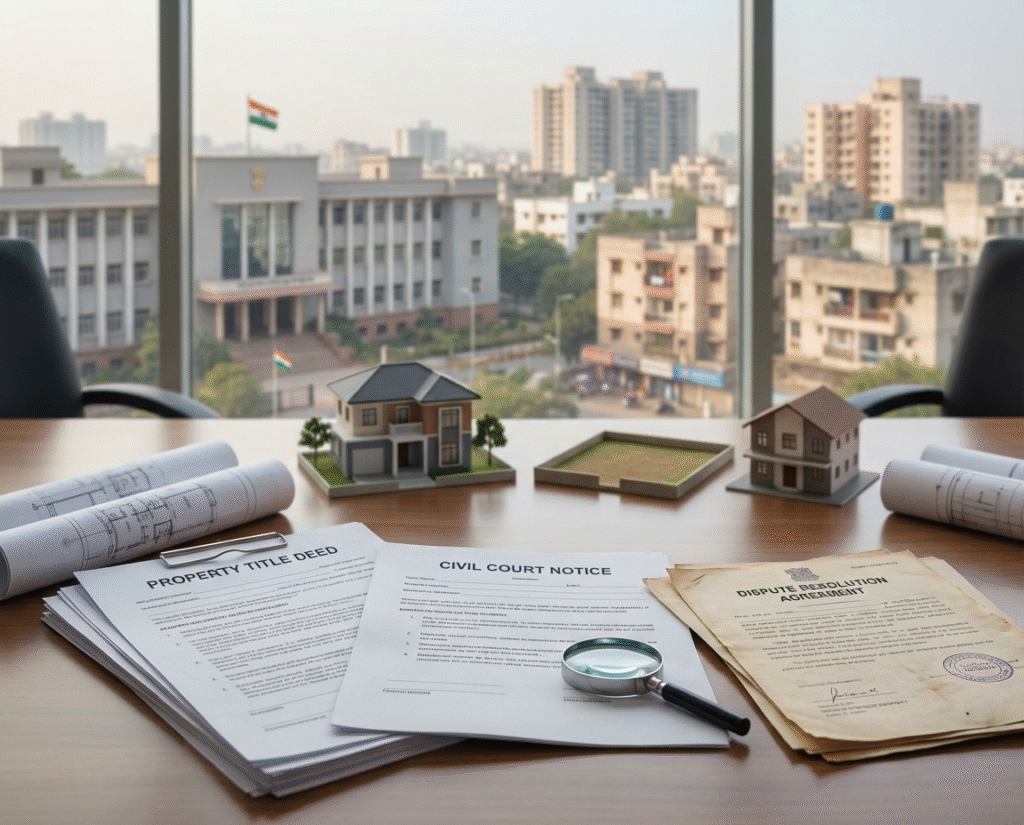
Property Disputes in India (2026)
Common Legal Issues, Rights & How to Resolve Them
Property disputes are among the most common and long-lasting legal conflicts in India. Whether it involves family property, ancestral assets, or land ownership, lack of proper documentation and legal awareness often leads to prolonged litigation.
This blog explains property dispute laws in India as applicable in 2026, common types of disputes, and legal remedies available through Indian courts.
What Is a Property Dispute?
A property dispute arises when two or more parties claim legal rights over the same property. These disputes may relate to ownership, possession, title, inheritance, or boundaries.
Property disputes are generally civil in nature but may involve criminal aspects in cases of fraud or illegal possession.
Common Types of Property Disputes in India
1. Ancestral Property Disputes
Conflicts often arise during partition among family members. Legal heirs have a birthright in ancestral property, subject to applicable personal laws.
2. Partition Disputes
When co-owners disagree on division of property, a partition suit may be filed before a civil court.
3. Title and Ownership Disputes
Disputes occur due to:
Missing or forged documents
Improper registration
Multiple sale deeds for the same property
4. Land Encroachment Issues
Illegal occupation or boundary disputes are common in both urban and rural areas.
5. Property Disputes After Death
Lack of a valid will often leads to inheritance disputes among legal heirs.
Ancestral vs Self-Acquired Property (Important Distinction)
Ancestral Property: Property inherited up to four generations, where legal heirs have a right by birth.
Self-Acquired Property: Property purchased or acquired by an individual using personal funds, where the owner has full control.
Understanding this distinction is crucial in resolving property disputes.
Legal Remedies Available for Property Disputes
1. Partition Suit
Filed to divide jointly owned property among co-owners.
2. Declaration of Title
Filed to legally establish ownership over the property.
3. Permanent or Temporary Injunction
Prevents illegal sale, transfer, or construction during dispute.
4. Possession Suit
Filed to recover possession from unlawful occupants.
Property Documentation and Legal Verification
Proper documentation plays a key role in avoiding disputes:
Sale deed
Title deed
Encumbrance certificate
Property tax receipts
Will or succession certificate
Legal verification before purchase is strongly recommended.
Property Disputes and Court Process (2026 Perspective)
With modern procedural reforms:
Courts encourage settlement and mediation
Digital land records have improved transparency
Time-bound hearings are emphasized
However, property cases still require careful legal strategy due to their complexity.
Importance of Legal Advice in Property Matters
Property disputes involve:
High financial value
Long-term consequences
Complex documentation
An experienced advocate helps in:
Title verification
Filing appropriate civil suits
Preventing illegal transfers
Securing rightful ownership
Early legal intervention can save years of litigation.
Conclusion
Property disputes can disrupt families and cause financial loss if not handled properly. Understanding legal rights, documentation requirements, and available remedies is essential for protecting property interests.
If you are facing a property dispute or planning to purchase property, consult an experienced advocate to ensure your rights are protected and legal procedures are followed correctly.